


MEDICAL-GRADE POLYMERS
Proterial Cable America High Performance Medical Solutions (PCA-HPMS) works with more than 30 medical-grade polymers and plastics selected to meet the stringent requirements of today’s medical device applications. Whether your objective is greater chemical resistance, improved biocompatibility, or tighter dimensional control, we help you identify the right polymer to meet the specific performance requirements of each application.
We offer a wide range of compounds and materials carefully selected for their exceptional properties, ensuring high performance and reliability in medical applications. These polymers provide device designers with the structural integrity and biocompatibility that medical applications demand, without compromising patient safety.
View All Materials
A rigid, economical thermoplastic that medical device manufacturers rely on for injection molding of housings, handles, and other plastic components, often in lower-risk Class I devices where cost and dimensional stability matter more than extreme performance.
A fluoropolymer offering good chemical and cold-impact resistance that coextrudes with conventional polymers at lower processing temperatures, making it suitable for medical use in catheters and multilayer/multi-lumen tubing.
Offers high transparency, chemical inertness, low friction, and solid heat resistance, and is often used as a reflow aid over softer catheter jacket materials like Pebax or nylon.
A self-aligning polymer with exceptional structural integrity and stiffness, holding up under high temperatures while still retaining enough flexibility for deflectable, torqueable, MRI-compatible catheter designs.
Lightweight, corrosion- and abrasion-resistant, with mechanical properties and a high bend radius for kink resistance that make it a common choice for catheter shafts and balloon tubing.
A high-performance thermoplastic with excellent chemical resistance, thermal stability, and biocompatibility, used in orthopedic implants, spinal fusion cages, and other implantable devices.
Combines excellent chemical resistance with stability at high temperatures, used in high-purity fluid transfer systems that must resist caustic environments without leaching contaminants.
Valued for low friction, low moisture absorption, and clean machinability into precision medical components, used in surgical instrument handles and other medical parts requiring controlled motion.
A polycarbonate-based medical TPU formulated for enhanced chemical resistance, oxidative resistance, and biostability, used in medical implants like cardiac rhythm management devices and chronic vascular devices.
A broad family of elastomeric, high-performance polymers that combines rubber-like flexibility with thermoplastic processability; specific grades (Pellethane, Tecothane, Carbothane, etc.) are often overmolded onto rigid components and tuned for particular medical performance needs.
A family of aliphatic and aromatic polycarbonate-based thermoplastic polyurethanes that stay chemically resistant and biostable in applications exposed to biological and chemical degradation.
Combines superior impact strength and abrasion resistance with chemical inertness and flexibility, and withstands gamma, ETO, and autoclave sterilization for catheter and device applications.
One of the more common plastics for extrusion, it’s lightweight and chemically inert, resisting cracking in rigid catheter designs and fluid-handling components.
Offers greater pliability than HDPE while retaining polyethylene’s chemical compatibility, making it suited to flexible tubing and packaging materials that require repeated bending.
Offers dimensional stability, low moisture absorption, and high electrical resistance, and meets FDA requirements for use across the medical device industry.
Polyurethane chemistry dates back to German engineers at Bayer in the 1930s, and Pellethane carries that lineage forward as a family of TPUs known for resilience, low-temperature performance, gamma-radiation tolerance, and smooth surfaces across a range of hardnesses.
Offers high-temperature resistance, low density, and chemical resistance at low cost, used in surgical instruments, surgical tools, syringes, vials, and sutures.
Intrinsically clear, rigid, and easy to sterilize, polyvinyl chloride remains a mainstay for blood bags, IV bags, tracheal tubes, and dialysis equipment.
An aliphatic, polyether-based TPU valued for optical clarity and biodurability, with a documented history of medical use in devices like peritoneal dialysis catheters.
A high-strength, thermally stable (Tg 217°C) thermoplastic with strong structural integrity, used in surgical instruments, equipment housings, catheter components, and dental devices.
A fluoropolymer with extremely low permeability and strong chemical resistance, well-suited to tubing that needs to act as a barrier against corrosive substances.
A flexible, optically clear material that achieves softness without plasticizers, used in IV bags and other drug delivery systems where biocompatibility and gas permeability matter.
Offers excellent flex fatigue resistance and spring-like performance across a broad temperature range, with strong chemical resistance to sterilization solutions, making it suitable for healthcare applications in stent deployment systems and medical prosthetics.
A middle ground between rigid and flexible polyethylene grades, combining a low coefficient of friction with durability for catheter tubing and other medical parts like dilators and sheaths.
An elastomer delivering superior torque transference and kink resistance with tunable durometer ranges, making it a preferred material for catheter shafts, guidewires, and stent delivery systems.
Molds into ultrathin walls with high tensile strength and favorable mechanical properties at low compliance, making it the standard material for angioplasty balloon catheters.
Resists degradation from steam and repeated sterilization cycles, used in surgical instrument trays, heart valves, and dialysis equipment components.
A polycarbonate-based medical TPU available in aromatic and aliphatic grades across a wide hardness range, suited to healthcare applications where further public detail on this specific grade is limited.
An aromatic, polyether-based TPU offering solvent resistance and biological evaluation-tested biostability across a wide range of hardnesses.
Combines elastomer-like softness (45–80 Shore A) with thermoplastic processability and no PVC, silicone, or latex, often over-molded for patient comfort in infusion tubing, drainage tubing, and endoscopy components.
We work with more than 30 medical-grade polymers and plastics, from fluoropolymers and engineering thermoplastics to biomedical TPUs, each selected for the chemical resistance, biocompatibility, and mechanical performance your device needs. Whether you’re building a catheter shaft, a surgical instrument tray, or an implantable component, our material expertise helps you find the right polymer for the job.
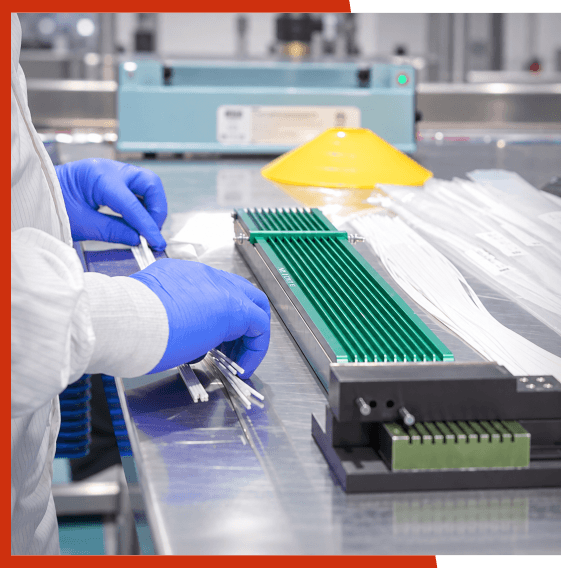
THE PCA-HPMS DIFFERENCE
We are committed to helping you innovate, adapt, and excel with confidence. Partner with us, and let’s shape the future together.
We work closely with our customers to ensure every extrusion meets their exact requirements. From initial concept to full production, our team is dedicated to delivering tailored solutions that consistently exceed expectations.
Supported by our dedicated R&D lab and Innovation Hub, we continually push the boundaries of extrusion technology to develop cutting-edge solutions that help our customers stay ahead of evolving demands.
We work with the materials our customers specify and have a proven history of selecting and processing top-tier materials to ensure exceptional performance and durability.
With a specialized team of engineers, ISO Class 8 and Class 9 Cleanrooms, a leading rapid prototype lab, and manufacturing experts, PCA-HPMS is equipped to deliver reliability, precision, and excellence in every extrusion.
Medical-grade polymers are plastic materials manufactured and tested to standards that qualify them for contact with the human body, bodily fluids, or medical products. They range from advanced materials like PEEK and polyimide to widely used TPUs like Pellethane and Tecothane, and they’re chosen for chemical resistance, mechanical properties, and the device’s sterilization method. Not every plastic qualifies — manufacturers confirm that a resin is genuinely medical-grade through biological evaluation under ISO 10993, USP Class VI testing, and other risk-management steps.
Medical extrusion is the manufacturing process used to produce medical-grade tubing and other plastic components: melted medical polymers, including high-performance polymers, are pushed through a shaped die to form a continuous profile. Proterial’s HPMS division supports single-lumen and multi-lumen tubing extrusion, reinforced tubing for added durability, and core mandrel options, all within ISO Class 8 and Class 9 cleanrooms to ensure manufacturing processes meet medical industry requirements.
Custom medical extrusion means engineering tubing extrusion around a specific medical application, such as multi-lumen configurations, reinforced walls, over-molded components, or tubing built around a particular core mandrel. Because Proterial designs and builds its own tooling in-house, custom medical extrusion projects move faster and hold tighter dimensional stability than programs that depend on outside tooling suppliers.
HPMS runs 15 extruders alongside in-house post-extrusion operations, catheter sub-assembly, medical machining, and custom tooling, all under one roof. These medical extrusion technologies extend to value-added operations like punching, drilling, printing, flaring, and welding, so a single vendor can take a project from raw polymers to a finished, sterilization-ready part.
Medical-grade tubing is used throughout the healthcare industry: catheter shafts, guidewire liners, IV bags and blood bags, drug delivery systems, drainage tubing, and diagnostic devices, among other medical products. Because tubing extrusion can combine multiple resins in a single wall or lumen, medical device manufacturers can balance flexibility, torque control, and abrasion resistance in a single tube.
There’s no single right polymer for every job. Device designers weigh chemical resistance, dimensional stability, heat resistance, and mechanical properties against how the part contacts the human body, how it will be sterilized, and how long it needs to perform in healthcare environments. A catheter tip designed for patient comfort requires a different resin than a rigid instrument housing, even though both fall under “medical grade materials.”
Most of the polymers on this page are designed to withstand repeated sterilization cycles, steam sterilization, ethylene oxide sterilization, or gamma radiation without compromising structural integrity. Sterilization compatibility is typically confirmed alongside biological evaluation and implantation effects testing under ISO 10993 as part of a broader risk management process, since direct contact with the human body carries its own patient safety requirements.
Material selection must account for how a device is evaluated and cleared for use. Biocompatibility testing under ISO 10993 covers the biological evaluation of patient contact, implantation effects, and other risk management considerations, and many of these materials carry USP Class VI or Class I ratings that qualify them for contact with bodily fluids and tissue.
Yes. Multi-lumen and multi-layer tubing extrusion routinely combines two or more polymers in a single tube. For example, an outer jacket for pushability paired with a lubricious inner liner. Reinforced tubing, core mandrel processing, and value-added operations such as welding and flaring enable manufacturers to join or finish these components on the same production line.
Extruded medical-grade tubing and plastic components support orthopedic implants, medical implants, dental devices, diagnostic equipment, surgical instruments, and surgical instrument trays, packaging materials for sterile products, tracheal tubes, oxygen concentrators, and general medical parts across the medical device industry. Other materials outside this list, like bone cement, rely on entirely different manufacturing methods, but wherever tubing extrusion or medical plastics are the right fit, in-house value-add operations round out the finished part.
Not all medical polymers are created equal. Injection molding and tubing extrusion require different resin behavior, and a Class I housing carries very different patient safety and patient-contact requirements than a polyvinyl chloride blood bag or a Class VI TPU used in a long-term implant. Some material families withstand high temperatures and demanding environmental conditions in ways commodity plastics can’t, which is part of why medical technology this varied rarely relies on just one resin across healthcare applications.
Medical OEMs worldwide trust PCA-HPMS as their polymers and medical extrusion partner. Our high-performance, custom medical extrusion capabilities and rigorous quality management system ensure precision, durability, and reliability across every material we work with.
Let’s bring your project to life!
Samples are available in 1m increments, up to 5m. Quotes are available for larger orders, available in 100m increments, subject to availability.